Organizational Fault lines: How Hidden Divisions Can Impact Team Performance and Company Culture
What?
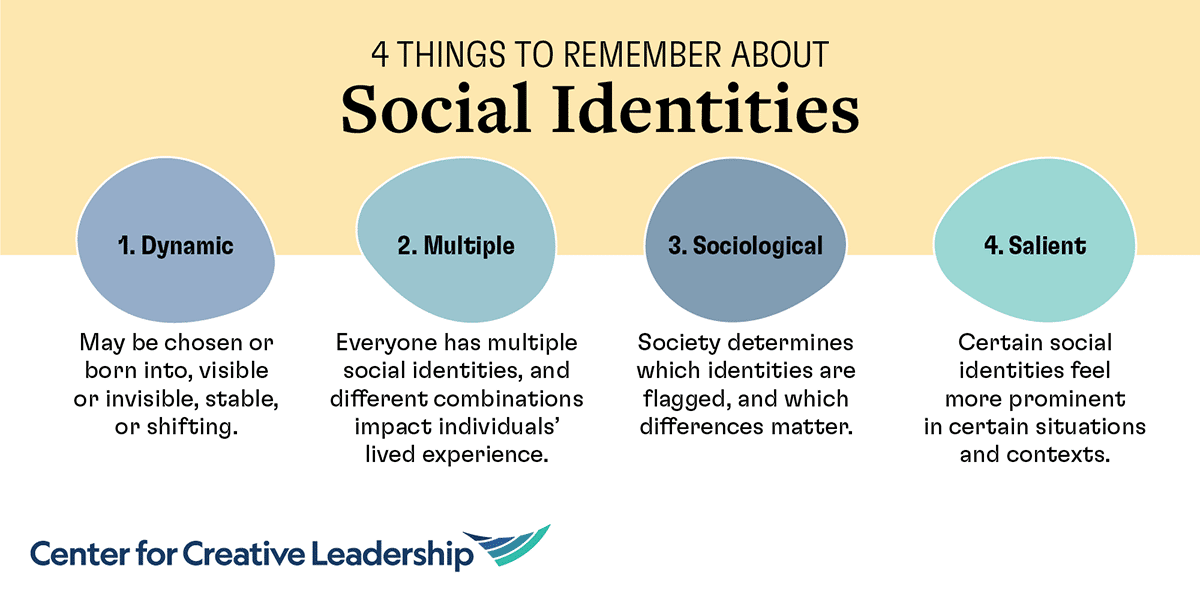
How can leaders change the perspectives of groups of team members of different backgrounds to avoid tension and conflict? When groups of individuals are comprised of different social identity groups there can be both beneficial and detrimental effects on the overall group in terms of performance. When groups within an organization are divided based on groups of different attributes such as race, nationality, or gender that can be described as an organizational faultline. Organizational faultlines can lead to "us vs. team" ideals which create barriers to creativity and frequent, quality communication. Us vs. them distinctions can also cause less commitment to the task with the overall group in favor of a commitment to one's sub-group.
So What?
As a leader, it is important to manage and direct a group to become efficient and effective in reaching a common goal or objective. When leaders are capable of managing interpersonal processes and are aware of social identity dynamics, the group is less likely to experience relationship conflicts due to different social identities (Homan & Jehn, 2010). Leaders should be able to recognize when there are differences among team members and attempt to reconcile any negative attitude and behaviors before it results in irreparable harm to the group. It is important that when these dysfunctions occur in the group and they are not addressed they should be viewed as a failure by the leader and not the group. In an article by Dan Oestreich, he states that there are numerous ways in which a leader can fail to address these potential conflicts such as delegating, excusing, rationalizing, and playing helpless (Oestreich, 2013). All of those reasons allow for the organizational faultlines to grow and become a bigger issue as leaders give up their personal and professional power in those situations. There are ways to overcome these organizational faultlines within a group. Dr.Blindenbach-Driessen describes how creating a shared common goal/objective while leaders also create a more relationship-focused leadership style. She argues that when a leader is focused on the people involved in the task and making sure they understand why it is important rather than just the task at hand it increases the overall satisfaction and well-being of members in the group (Blindenbach-Driessen, 2021). Although task conflicts can benefit group performance as it encourages dialogue and boosts creativity, they can also decrease performance when it is highly correlated to relationship conflicts (DeDreu & Weingart, 2003). Different sub-group members could perceive different opinions of a different sub-group as personal rather than task-related opinions, so it is important that leaders make sure that members are focused on the task rather than personal conflicts and tensions.
Now What?
I think as a leader it is important to understand when conflict is necessary and when it should be avoided. Conflict can useful when creating inspiration and new ideas when it is task-related, but when that tension becomes relationship-based then the leader and members of the group need to address the potential faultlines within the group. As a leader, I should become more aware of different social identities and cultural competencies which can help me as a leader reduce relationship-based conflict and increase communication and trust between different social groups. Faultlines are created due to the lack of leadership presence and awareness, so if I am not creating a culture of positive relationships and experiences for all social identities, I have failed as a leader and should become more committed to reducing negative conflict while increasing positive conflict.
References:
Blindenbach-Driessen, F. (2021, December 1). 3 ways to prevent faultlines from breaking up in a time of crisis. Organizing for Innovation - Innovation Process & Management. Retrieved February 21, 2023, from https://www.organizing4innovation.com/3-ways-to-avoid-faultlines-to-crack-in-a-time-of-crisis/
De Dreu, C. K., & Weingart, L. R. (2003). Task versus relationship conflict, Team Performance, and Team member satisfaction: A meta-analysis. Journal of Applied Psychology, 88(4), 741–749. https://doi.org/10.1037/0021-9010.88.4.741
Hannum, K., McFeeters, B. B., & Booysen, L. (2010). Leading across differences: Cases and perspectives. Pfeiffer.
Homan, A. C., & Jehn, K. A. (in press.). How leaders can make diverse groups less difficult: The role of attitudes in perceptions of diversity. In S. Schuman (Ed.). The handbook for working with difficult groups: How they are difficult, why they are difficult, and what you can do. San Fransisco: Jossey-Bass.
Oestreich, D. (2013, June 28). Leadership fault-lines . Unfolding Leadership. Retrieved February 21, 2023, from http://www.unfoldingleadership.com/blog/?p=4844


Comments
Post a Comment